
Maintenance and Deck Repair In Madison
Madison weather can be tough on decks, from freezing winters to humid summers. If your deck has loose boards, soft spots, or wobbly railings, we’re here to fix it right. Our local Madison deck repair team focuses on safe, solid repairs that hold up to Wisconsin’s seasons, so you can get back to enjoying your backyard with confidence.
What Are the Most Common Deck Problems in Madison?
Wisconsin’s climate punishes decks harder than almost any other region. Freeze-thaw cycles, snow load, summer UV exposure, and high humidity create a perfect storm for structural failure. Here is what we see most often in Madison deck repair calls.
Ledger Board Rot and Failure
We inspect ledger boards on every deck repair call because this single connection point represents the highest structural risk. Proper flashing prevents this problem entirely, but many older decks in neighborhood like Shorewood Hills built without it.
Wood Rot in Joists and Beams
If rot affects less than 30 percent of a structural member’s cross-section, epoxy repair may work. Beyond that, replacement becomes necessary for safety. We use moisture meters to verify dryness before treating wood, preventing repair failure down the line.
Loose or Damaged Railings
In Madison, guardrails must be at least 36 inches high with balusters spaced no more than 4 inches apart. Loose railings are not just an aesthetic issue — they are a code violation and a safety hazard. We repair or replace deck railings to meet current building code.
Soft or Warped Deck Boards
Surface boards show damage first. Warping, splintering, soft spots, and cupping indicate water penetration. Composite boards crack when moisture gets underneath. Wood boards rot when sealing fails. Board replacement is straightforward if the framing underneath is solid.
Can rotted wood be repaired without replacing it?
Yes, but only when rot is superficial and non-structural. We remove decayed material, treat remaining wood with hardener, and rebuild the surface using marine-grade epoxy. This works for trim boards, fascia, and surface decking — not for load-bearing joists, beams, or ledger boards.
Our Services for Maintenance and Deck repair In Madison
Structural Repairs
We handle critical structural issues to keep your deck safe and secure, including ledger board replacement with proper flashing installation to prevent water damage. Our team repairs or reinforces weakened joists and beams, restores damaged posts and support columns.
Surface Repairs
To improve safety and appearance, we replace damaged or worn deck boards — whether wood, composite, or PVC. We also repair unstable stairs and steps, fix or replace loose and aging railings, and restore fascia and trim boards to give your deck a clean, finished look while protecting its structure.
Preventive Services
Beyond repairs, we focus on prevention by identifying and treating early signs of rot, installing moisture barriers to guard against water intrusion, upgrading flashing systems, and replacing rusted screws or corroded bolts with durable hardware designed to withstand Wisconsin’s changing weather conditions.
Cleaning and Power Washing
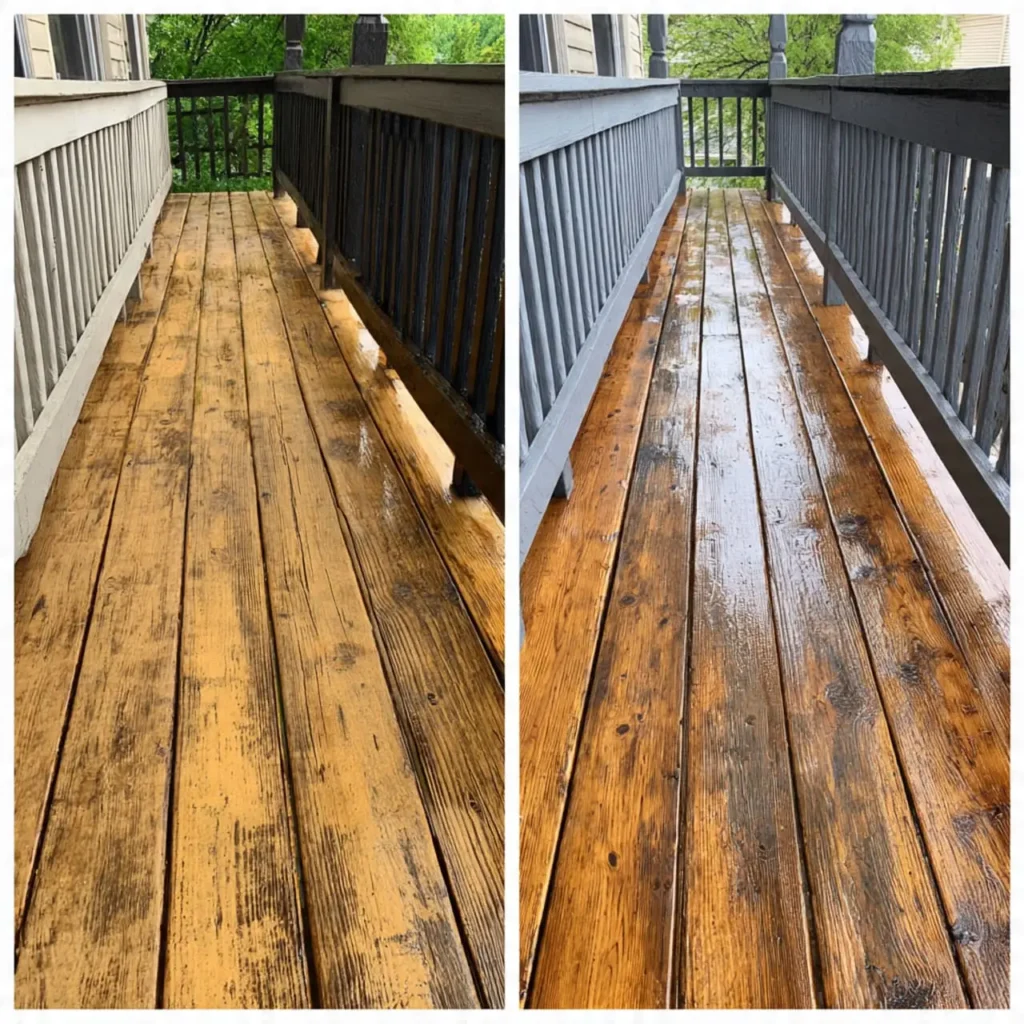
Dirt, mold, mildew, and algae accumulate on decks exposed to shade. Properties near Lake Mendota, Lake Monona, or wooded areas in Cross Plains and Oregon see accelerated mold growth. We use adjustable pressure settings to clean wood and composite without gouging or streaking.
Staining and Sealing
Wood decks need staining every 1 to 2 years in Madison. UV exposure fades color. Moisture penetrates unsealed wood, leading to rot. We use penetrating stains that soak into wood fibers rather than film-forming products that peel. Sealing creates a moisture barrier that prevents water damage, warping, and mold.
Refinishing and Restoration
Refinishing involves stripping old stain, sanding the surface smooth, and applying new stain and sealer. This brings weathered wood back to a like-new appearance. We use eco-friendly stripping products safe for landscaping and pets
How Do Wisconsin Winters Affect Deck Maintenance?
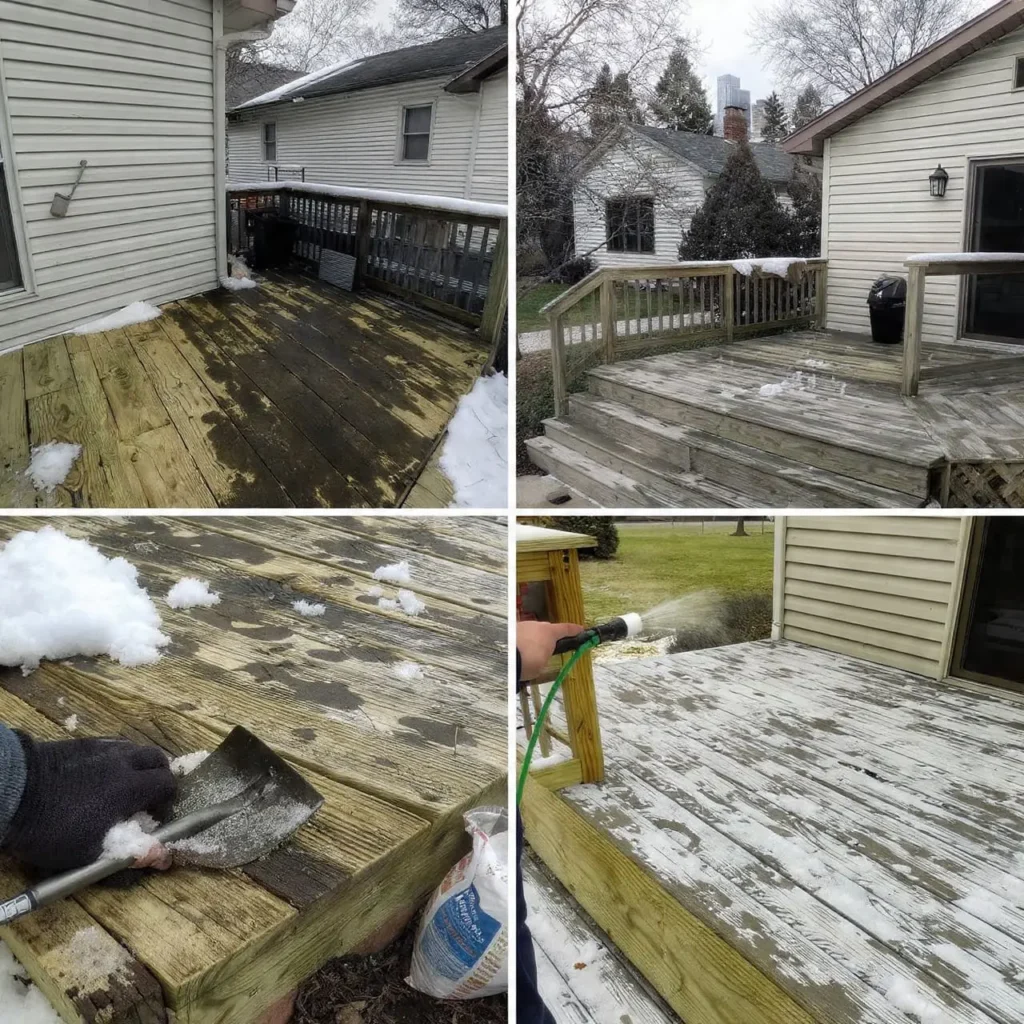
Freeze-thaw cycles are the single biggest threat to deck longevity in Madison. Water soaks into the wood grain during the day, freezes overnight, expands, and cracks the wood fibers. Repeat this dozens of times per winter, and you get warping, splitting, and structural failure.
What This Means for Maintenance:
Properties in Fitchburg, Verona, and McFarland with south-facing decks see accelerated UV damage in summer. Properties in shaded areas near Capitol Square, Monroe Street, or Tenney Park see more moisture and mold. We tailor maintenance schedules to your deck’s exposure.
When Should You Repair vs Replace Your Deck in Madison?
Not every damaged deck needs a full rebuild. Here is how we evaluate repair vs replacement.
Repair Makes Sense When
Replacement Makes Sense When
How much does deck repair cost in Madison?
Minor repairs like board replacement run $500 to $2,000. Structural repairs involving joists, beams, or ledger boards range from $3,000 to $8,000. Full resurfacing with composite boards costs $8,000 to $15,000 for a standard 400-square-foot deck. We provide itemized estimates after inspection.
Case Study– A Recent Project
A homeowner in Maple Bluff called us last October after her contractor told her the entire deck needed to be replaced. The quote was $28,000. She wanted a second opinion. We came out, inspected the structure, and found that the ledger board had rotted through from poor flashing, but the joists, beams, and footings were all sound. We replaced the ledger board, added proper flashing, resurfaced the deck with new composite boards, and charged her $8,500. The deck has been solid for three winters now.
Why Contact US?
When it comes to your deck, you need a local Madison deck builder team that understands Madison’s climate, building codes, and homeowner expectations. We respond quickly, provide honest assessments, and recommend only what your deck truly needs — no upselling, no shortcuts. From small repairs to full structural fixes, we focus on safety, durability, and clean workmanship. If you want clear communication, fair pricing, and results built to handle Wisconsin’s seasons, we’re ready to help.
10+ Years of Local Deck Experience
Skilled, Licensed & Insured Team
Built to Withstand Wisconsin Weather